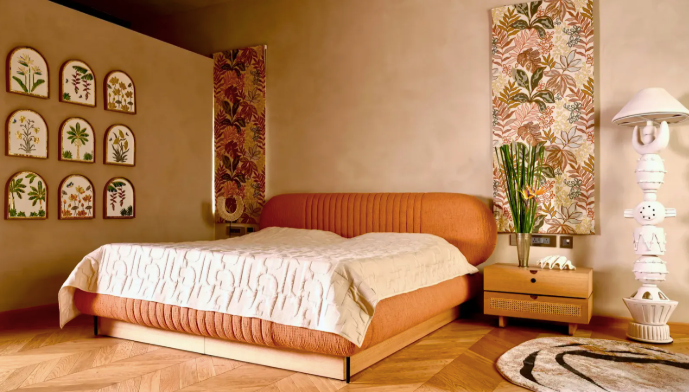
Designer bedrooms hinge on a restrained visual language: sculptural silhouettes, a restrained palette, and tactile contrasts. The approach blends matte with gloss, rough with refined, creating a quiet texture map. Smart layouts and hidden storage sustain calm without sacrificing function. Layered lighting, careful art, and resilient plants give depth, while color and material choices steer the room’s mood. The framework promises further nuance, inviting readers to probe how each element can be tuned for personal expression.
How to Define Your Designer Bedroom Style
Defining a designer bedroom style begins with distilling personal preferences into a coherent visual language: whether sculptural minimalism, textural maximalism, or a muted, timeless elegance. A clear framework emerges through color palette choices, deliberate furniture silhouettes, and careful texture balance. Material contrasts sharpen identity, guiding spatial rhythm while preserving freedom to evolve, rather than prescribing rigid formulas.
Master the Color, Texture, and Material Mix
Color, texture, and material choices sculpt the room’s narrative, translating a designer’s language into tangible tactility. The ensemble balances texture pairing with deliberate contrasts, where rough meets refined and matte meets gloss. Color harmony emerges through restrained palettes and purposeful accents, guiding mood without shouting. A disciplined mix yields layered depth, tactile excitement, and coherent, liberating spatial experience.
Smart Layouts and Storage for Calm, Chic Spaces
Smart layouts and strategic storage fuse everyday practicality with refined aesthetics, shaping rooms that feel calm yet purposeful. The approach favors minimal partitions, enabling generous flow while preserving structure. Hidden storage surfaces as quiet efficiency, decluttering without visible clutter. Compact layouts maximize function in small footprints, and monochrome palettes provide cohesion, texture through materiality, and a sense of restrained freedom.
Lighting, Art, and Plants to Elevate the Retreat
Lighting, art, and plants act as the threefold framework for a refined retreat, guiding mood, texture, and life without overwhelming the space. The design favors intentional lighting rituals that shape atmosphere, while plant placement offers structure and softness. Art becomes punctuation, not decoration, linking color and form. The approach remains restrained, freeing space for personal expression.
Frequently Asked Questions
How Much Should I Spend on a Designer Bedroom Makeover?
The question centers on cost vs value; a designer bedroom makeover should prioritize budget prioritization, balancing investment with lasting impact. He assesses scope, negotiates materials, and aims for thoughtful quality, ensuring proportional spend and freedom in final aesthetic.
Which Window Treatments Best Suit a High-End Look?
Window treatments that align with a high-end look emphasize clean lines, premium fabrics, and subtle texture. Pair luxurious textures with tailored rods, allow strategic lighting to enhance finishes, and select colors that complement lighting to achieve refined, free-spirited interiors.
Can Small Bedrooms Feel Luxurious Without Clutter?
Small bedrooms can feel luxurious without clutter; they achieve small space luxury through restraint and intentional design. Clutter free opulence emerges from pared essentials, thoughtful storage, and airy palettes—freedom in form, precision in detail, calm in proportion.
What Fabrics Read as Premium on a Budget?
Premium textiles manifest as breathable weaves and tactile surfaces; budget luxury fabrics emphasize texture over ostentation, elevating surfaces with subtle luster. They convey refined depth, offering freedom through understated, durable choices that feel thoughtfully conceived and universally adaptable.
See also: Technology in Waste Management
How Long Does a Designer Bedroom Renovation Take?
A designer bedroom renovation typically spans 8–14 weeks, depending on scope. One interesting statistic: 60% of projects experience minor delays. The design timeline hinges on procurement and trades, with budget pacing guiding material selections and scheduling to maintain momentum.
Conclusion
A designer bedroom is defined by restraint that reads as intention, by balance that reads as confidence, by craft that reads as clarity. It orchestrates color, texture, and material into a quiet symphony, then mirrors it in a layout that whispers rather than shouts. It pairs light with shadow, art with plant, storage with ease, form with function, all while evolving with personal taste. It invites calm, sustains curiosity, and rewards lasting sensibility with deliberate, enduring style.