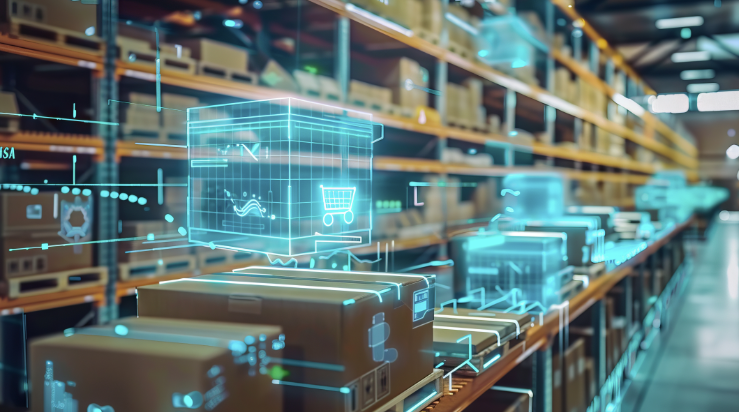
Technology has transformed supply chain management by enhancing operational efficiency and transparency. Automation and artificial intelligence minimize human error and costs, while blockchain technology reinforces traceability and trust. The Internet of Things offers real-time data for inventory optimization, yet challenges like data security and user training persist. Understanding these dynamics is crucial for organizations seeking competitive advantages. What strategies can be employed to overcome these hurdles and fully leverage technological advancements?
The Role of Automation and AI in Supply Chains
As supply chains become increasingly complex, the integration of automation and artificial intelligence (AI) emerges as a pivotal strategy for enhancing efficiency and responsiveness.
Robotic process automation streamlines repetitive tasks, reducing human error and operational costs.
Meanwhile, predictive analytics enables data-driven decision-making, allowing organizations to anticipate demand fluctuations and optimize inventory management, ultimately fostering a more agile and resilient supply chain ecosystem.
Impact of Blockchain on Transparency and Traceability
While traditional supply chain systems often struggle with transparency and traceability, the advent of blockchain technology offers a transformative solution.
Blockchain benefits include immutable records and decentralized verification, enhancing supply chain integrity. This technology allows stakeholders to trace products in real-time, ensuring authenticity and reducing fraud.
Consequently, organizations can foster trust, streamline operations, and uphold accountability throughout the supply chain ecosystem.
Harnessing the Internet of Things for Real-Time Insights
Utilizing the Internet of Things (IoT) enables organizations to gain real-time insights into their supply chain operations, significantly enhancing decision-making processes.
Smart sensors collect data across various touchpoints, facilitating the integration of predictive analytics to forecast demand and optimize inventory levels.
This dynamic approach empowers businesses to respond swiftly to market fluctuations, ultimately improving efficiency and customer satisfaction while maximizing operational freedom.
See also: pikturf
Challenges and Considerations in Implementing New Technologies
Implementing new technologies in supply chain management presents a range of challenges that organizations must navigate to achieve successful integration.
Key considerations include ensuring robust data security to protect sensitive information and investing in comprehensive user training to facilitate smooth adoption.
Organizations must also address potential resistance to change, aligning technological advancements with existing processes to maximize efficiency and operational effectiveness.
Conclusion
In conclusion, the integration of advanced technologies in supply chain management not only enhances operational efficiency but also fosters trust among stakeholders through transparency and traceability. As the adage goes, “A chain is only as strong as its weakest link,” emphasizing the importance of addressing challenges such as data security and user training. By navigating these complexities, organizations can fully leverage the potential of automation, AI, blockchain, and IoT to create resilient and responsive supply chains.